Your new hire is at their desk — or their kitchen table — at 9:15 on day one. The laptop works, the welcome email went out, HR has the forms. And in the quiet, they're asking one question: did I make the right choice? Most people start answering it in the first week or two, long before they've done any real work. Onboarding is how you help them answer "yes."
The takeaway up front: onboarding a new employee is your job as their manager — not something to hand off to HR, IT, or a slide deck. HR runs the paperwork; you own whether the person feels welcome, knows what they're responsible for, and lands a first win. Get the first day, the first week, and the first 90 days right, and you get someone productive and committed months sooner — instead of someone quietly updating their CV by week six. Here's how, with a checklist you can run this week.
Start before day one
The worst onboarding mistakes happen before the new person arrives. Nothing says "we weren't ready for you" like a laptop that isn't set up and a manager stuck in meetings all morning. A little pre-boarding fixes most of it.
In the days before they start: send a warm, human welcome note — start time, where to go or how to log in, and what day one looks like. Order equipment and accounts early so logins work on day one, not day three. Tell your team who's joining and to make them welcome. And genuinely protect your calendar for their first day and early check-ins.
One more five-minute job: decide their first small win. Pick one real but achievable thing they can finish in week one — a minor fix shipped, a document drafted, a customer call shadowed and summarized. You'll use it to give them early momentum instead of a week of reading wiki pages.
Day one: belonging beats paperwork
Day one sets the emotional tone, and the goal is simple: the person should end it thinking this was a good decision and these are good people. Forms and security training can wait until the afternoon.
Greet them yourself — don't delegate the first hello. Run a short welcome one-on-one: 30 minutes, no work content, just how the team operates, how you like to communicate, what the week holds, and room for questions. Introduce the team and their onboarding buddy. Show them where things live — channels, docs, the calendar — so they're not guessing.
Above all, make sure they finish day one having done one real thing, however small: a first message in the channel, a one-line change, a call joined. A single genuine action builds more confidence than a full day of watching.
The first week: role, priorities, and who's who
By the end of week one, a new hire should answer three questions without hesitating: What do I own? What matters most right now? Who do I ask when I'm stuck? If they can't, the week wasn't clear enough — and unclear is how good people end up anxious and underused.
State the role in one plain sentence: what they're responsible for and what "good" looks like. Resist describing everything the team does — you'll firehose them. Name the top one to three priorities for the first month and say the rest can wait. Map the people: who to go to for access, for context, for a second opinion. Assign an onboarding buddy — a peer, not you — whose job is to field the "silly" questions the new person won't bring to their manager. That one move removes a huge amount of week-one friction. Then hand over that first task with a clear outcome, and let them do it.
The 30-60-90 day plan
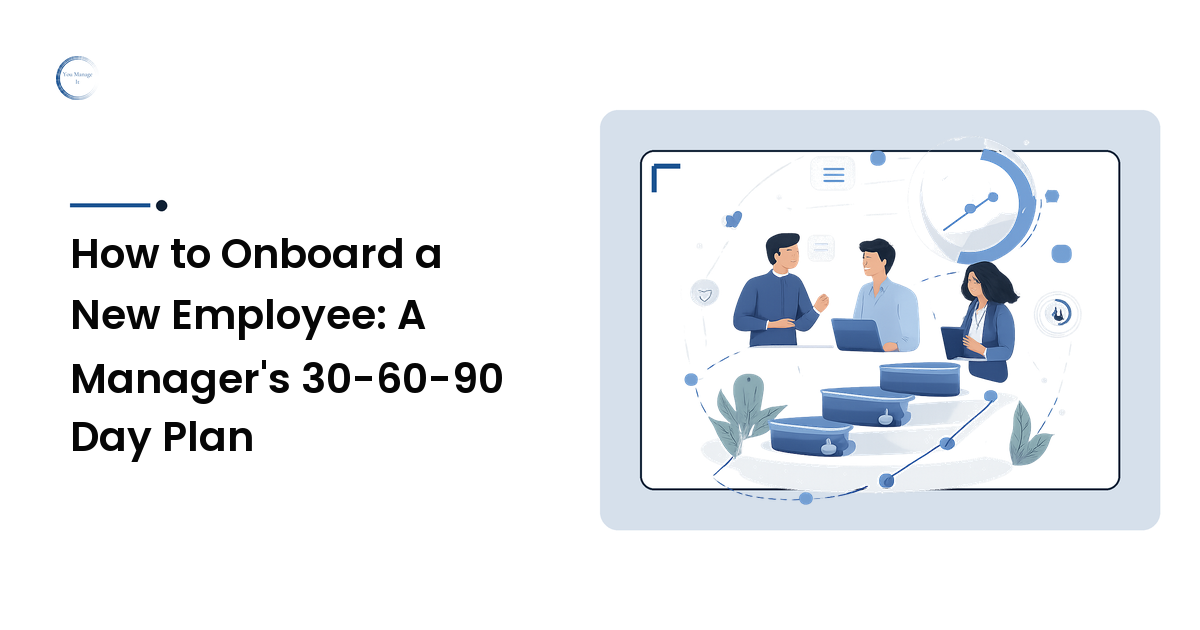
New hires ramp faster when they can see the road ahead, so give them a 30-60-90 day plan — a page, not a project. Frame each stage by what success looks like, and share it with them so it's a map, not a secret scorecard.
- Days 1-30 — Learn. Understand the team, tools, and context; meet key people; complete a few small, real tasks with support. Milestone: they've shipped one visible thing and can explain what the team does and why.
- Days 31-60 — Contribute. Take on a recurring responsibility and work more independently, checking in rather than asking permission. Now is also the time to ask them how onboarding is going — they can still see gaps a veteran can't. Milestone: they handle a normal task end to end with light oversight.
- Days 61-90 — Own. Full ownership of their core responsibilities; starting to contribute ideas. Milestone: they're operating at the level the role expects, and you hold a candid two-way review at 90 days — how they're doing, and how you can support them better.
Adjust the pace to the role and person; a senior hire may move faster, a career-changer slower. The stages are a guide, not a stopwatch.
Set up feedback loops from week one
The highest-leverage onboarding habit is a regular one-on-one, and it starts in week one — not "once things settle down." Early on, weekly beats biweekly: a new hire generates a lot of small questions and quiet uncertainties, and a standing slot is where those surface before they harden into frustration or bad habits.
Keep early one-on-ones light and two-way: what's clear, what isn't, what's blocking them, what surprised them. Give small, specific, encouraging feedback early — course-correcting gently in week two is a gift; saving it for a formal review in month three is a trap. If you've never run one-on-ones, use the one-on-ones guide to structure your first few.
The new-employee onboarding checklist
A checklist you can copy — run it top to bottom and adapt to your team.
Before day one - [ ] Send a warm welcome note: start time, where to go / how to log in, first-day plan - [ ] Order and set up equipment and accounts so logins work on day one - [ ] Tell the team who's joining; assign an onboarding buddy - [ ] Protect your calendar for day one and first-week check-ins - [ ] Decide their first small, achievable win
Day one - [ ] Greet them personally (in person or on video) - [ ] 30-minute welcome one-on-one — orientation, not work - [ ] Introduce the team and the buddy - [ ] Walk through where things live (docs, channels, calendar) - [ ] Make sure they do one real, tiny thing before the day ends
First week - [ ] State the role in one sentence: what they own and what "good" looks like - [ ] Name the top 1-3 priorities — not everything - [ ] Map the people: who to ask for what - [ ] Set the one-on-one cadence and put it on the calendar - [ ] Hand over a first task with a clear outcome
30 / 60 / 90 days - [ ] 30: shipped one small thing; can explain the team's purpose - [ ] 60: owns a recurring task; you've asked how onboarding went - [ ] 90: operating at role level; candid two-way review held
Common onboarding mistakes managers make
- Confusing onboarding with orientation. IT setup and an HR deck are the starting line, not the job. Onboarding is the weeks of context, relationships, and early wins only you can provide.
- The firehose. Dumping every process and acronym in week one guarantees none of it sticks. Sequence it: essentials now, the rest as needed.
- Disappearing after day one. Managers go quiet once the person seems "settled" — right when questions peak. Your attention in weeks two and three matters more than the day-one welcome.
- No first win, no clear priorities. Without an early success and a short priority list, capable people stall and assume it's their fault.
- Assuming experienced hires need less. A senior hire needs less skills training but just as much context — people, norms, priorities. Skip it and you waste their experience for a month.
FAQ
How long should onboarding a new employee take?
Plan for roughly 90 days to full productivity in most roles — a structured first 30, then lighter support through 60 and 90. Junior or simple roles ramp faster; senior or complex ones take longer. The trap is calling it "done" after week one, when the real onboarding is just starting.
What's the difference between onboarding and orientation?
Orientation is the one-time admin event: paperwork, policies, systems, the HR welcome session. Onboarding is the weeks-long process of turning a new hire into a confident, contributing team member — role clarity, relationships, priorities, feedback, and early wins. Orientation is a morning; onboarding is a quarter.
How do I onboard a remote employee?
Do everything above, but more deliberately, because none of it happens over a hallway coffee. Over-communicate the plan in writing, schedule more frequent short check-ins early, and be intentional about introductions and the buddy pairing. Make sure equipment and access work before day one — a remote hire can't lean over to a neighbor when a login fails.
How do I onboard an experienced or senior hire?
Shift the emphasis from skills to context. They know the craft; what they don't know is your team's priorities, norms, and who really makes decisions. Give them relationships and context fast, agree where you want their early impact, and resist skipping onboarding just because they're capable.
Is onboarding the manager's job or HR's?
Both, in different lanes. HR owns the process, paperwork, and compliance; the manager owns whether onboarding actually works — belonging, clarity, and the first win. When onboarding fails, it's rarely a missing form. It's a manager who assumed someone else had it covered.
Next step
Good onboarding isn't a program or a portal — it's a manager who prepared before day one, made the first week clear, and stayed close through the first 90 days. It costs a few focused hours across a quarter and pays back in someone who ramps faster, trusts you sooner, and stays. Pick your next hire, run the checklist, and start their one-on-one in week one. For more do-it-Monday management advice, visit YouManageIt.