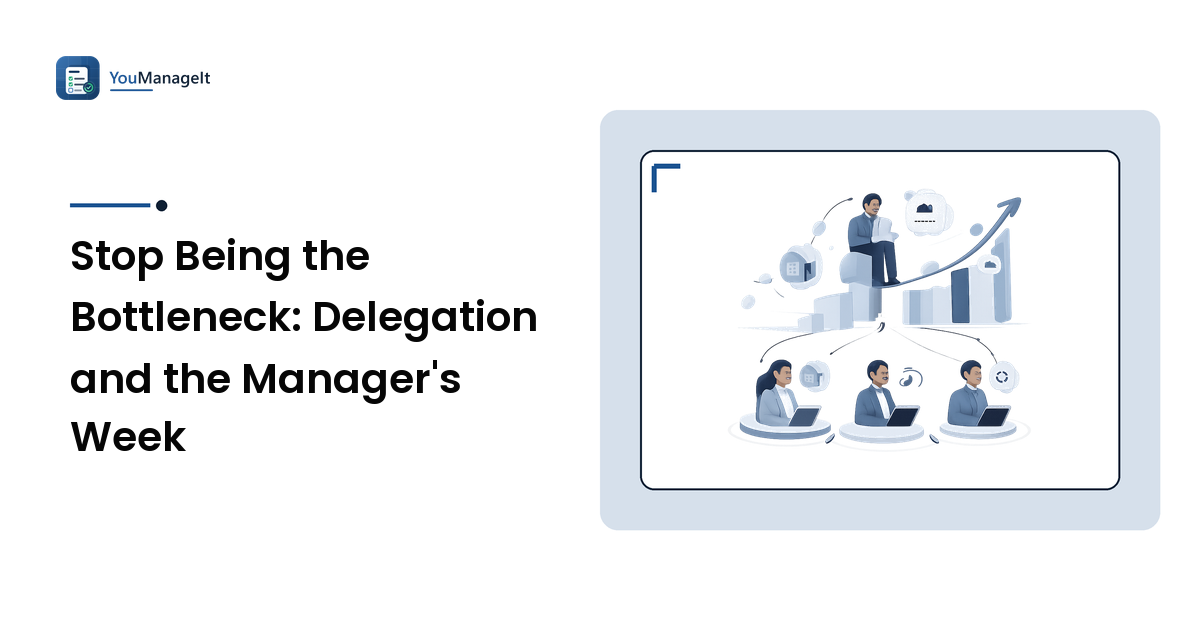
You delegated the task. You were clear about what you wanted. And three days later it's back on your desk — half-finished, or done wrong, or stalled because the person kept coming to you with questions. So you quietly take it back, conclude "it's faster if I just do it myself," and the cycle continues. This is the most common delegation failure, and it almost never comes from delegating the wrong task. It comes from delegating at the wrong level.
Here's the takeaway up front: effective delegation isn't just handing over a task — it's handing over a clearly named amount of authority to go with it. People bring work back not because they're incapable, but because they don't know how much rope they have. Tell them the level explicitly and most of the bouncing stops. Below is a simple ladder of delegation levels and how to use it this week.
Why delegated work bounces back
When a task comes back unfinished, managers usually diagnose it as a skill or effort problem. Sometimes it is. Far more often, it's an authority problem: the person was unsure whether they were allowed to decide, so they did the safe thing and checked with you. That's not them failing to take ownership — it's them protecting themselves from overstepping, because you never told them where the line was.
Think about it from their side. You said "handle the venue for the offsite." Does that mean: research options and bring you a list? Pick one and book it? Or pick one but run it past you first? All three are reasonable readings of the same sentence. If they guess "research and bring a list" while you meant "just book it," you'll feel they did half the job; if they book it while you wanted to approve the choice, you'll feel they overstepped. Same task, same words, opposite failures — all because the level was never stated.
This is really a clarity-and-trust problem, which is the heart of leading a team well; the leading people guide covers the broader foundation. This piece is about the one move that fixes most day-to-day delegation.
The ladder of delegation levels
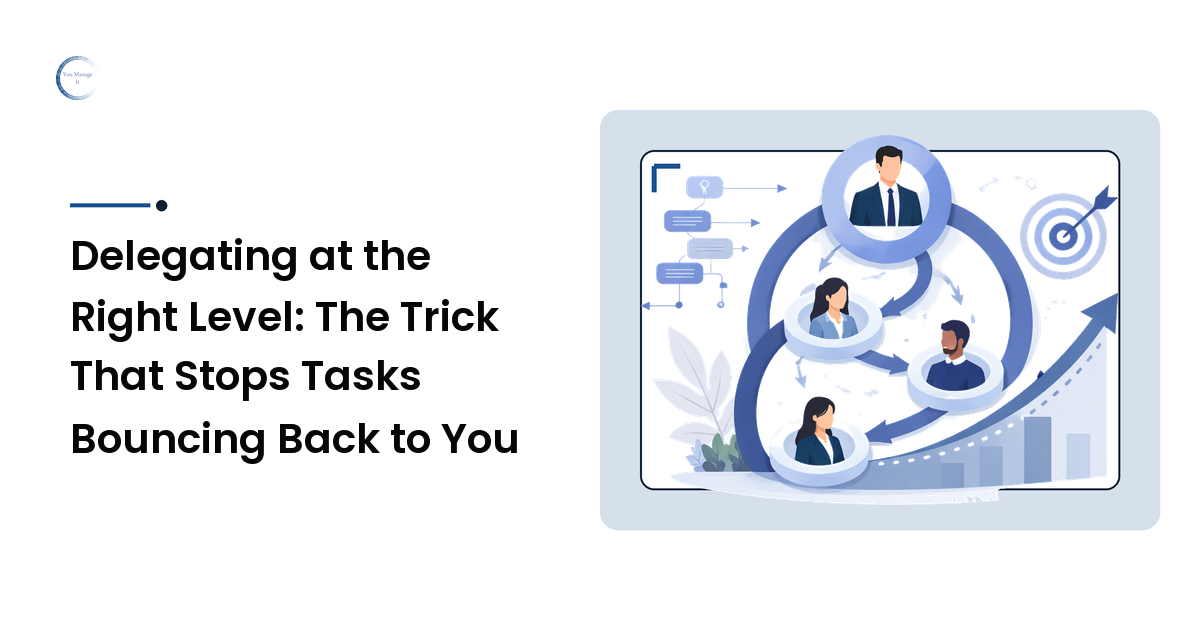
The fix is to name, out loud, how much authority comes with the task. A simple five-rung ladder covers almost everything, from least to most authority:
- "Do exactly this." You've decided; they execute. ("Send this email as written.") Lowest authority, fine for genuinely mechanical work, suffocating for anything else.
- "Look into it and bring me options." They research; you decide. Good for high-stakes or unfamiliar decisions where you want input but keep the call.
- "Recommend one, then we decide together." They do the thinking and commit to a choice; you make the final call with their reasoning in hand. This is the sweet spot for developing people — they own the analysis and the recommendation.
- "Decide, but check with me before you act." They make the call; you're a safety net before it goes live. Builds confidence while the stakes are still reversible.
- "Decide and go — just keep me posted." Full authority; you find out after. The goal state for trusted people on work within their lane.
The rungs aren't a ranking of "better" and "worse." Level 1 is right for a compliance-sensitive task; level 5 is right for a seasoned person on routine work. The skill is matching the rung to the person and the stakes — and saying which rung you mean.
A concrete worked example
A team lead, Priya, needs the quarterly client report drafted. Her instinct is to say "can you put together the client report?" — which is level-ambiguous and will bounce. Instead she names the level:
"I'd like you to draft the Q3 client report. This is a level 4 — you decide what goes in and how it's structured, then send me the draft before it goes to the client so I can do a final check. You don't need to ask me about the contents along the way; use your judgment and I'll flag anything in the review."
Look at what that one sentence did. It told the person they own the structure and content (no need to ask permission for every section), where the boundary is (Priya sees it before the client does), and what not to do (don't come back mid-draft with questions she's just authorized them to decide). The work won't bounce, because there's nothing to bounce about.
Next quarter, if the draft was strong, Priya can promote the same task to level 5 — "send it straight to the client, just copy me" — and visibly grow the person's authority. The task didn't change; the level did, and that progression is how you develop someone.
The common mistakes — and why managers make them
Delegating the task but not the authority. The core error. Managers are trained to be clear about what and by when, and assume authority is obvious. It isn't. People default to the lowest safe level when unsure, which feels to you like a lack of ownership. Name the rung and the "lack of ownership" usually evaporates.
Accepting "reverse delegation." Someone comes to you with a problem you've delegated, and you say "leave it with me, I'll sort it." It feels helpful and fast. But you've just taken the work back — the monkey jumped from their shoulder to yours. The fix is to hand it back with a level: "What do you recommend? Come back with a proposed answer and we'll decide" (level 3). Solve the problem through them, not for them.
Jumping straight to level 5 with new people. Over-delegating is as damaging as under-delegating. Hand someone full authority before they're ready and you'll get a poor outcome, then over-correct into micromanaging everything. Start a rung lower than feels necessary and promote as trust is earned — it's a dial, not a switch.
Staying at level 1 or 2 forever. The opposite failure: never moving people up the ladder, so they never grow and you stay the bottleneck. If you're still bringing every decision back to yourself, you've made a team of researchers, not decision-makers.
Edge cases and caveats
- High-stakes or irreversible work belongs lower on the ladder. Anything legal, financial, or safety-related warrants a lower rung regardless of how capable the person is. Match the level to the stakes, not just the skill.
- The right level differs per person and per task. The same person might be level 5 on something in their wheelhouse and level 2 on something new. Don't assign people a fixed "delegation level" — assign it per task.
- Naming the level isn't a substitute for context. People still need to know the why and the constraints. The level tells them how much they can decide; it doesn't tell them what good looks like. You still owe them that.
The one trick to remember
The next time you hand off work, add one sentence that names the level: "This is a 'decide and go,'" or "Bring me two options and I'll pick," or "Make the call, but run it past me first." It takes five seconds and removes the single biggest reason delegated work comes back — the silent guessing about how much authority came with it. Delegate the level, not just the task, and you'll stop being the place where your own delegations land.
FAQ
Why does work I delegate keep coming back to me? Usually because the person doesn't know how much authority they have, so they bring decisions back to be safe. Naming the delegation level — from "research and bring options" to "decide and go" — removes the guesswork and most of the bouncing.
How do I delegate without micromanaging? Pick a rung on the ladder that matches the person's experience and the stakes, then say it explicitly — and resist re-deciding things you've handed over. Micromanaging usually comes from never naming the level, so you keep getting pulled into decisions you meant to delegate.
What is reverse delegation? It's when work you've delegated comes back to you — someone brings you a problem and you take it on yourself instead of handing it back. Counter it by responding with a level: ask for their recommendation rather than solving it for them.
Should I always delegate at the highest level? No. High authority suits experienced people on routine, reversible work. For high-stakes, irreversible, or unfamiliar tasks, a lower rung is the right call. Match the level to both the person and the stakes, and raise it over time.
How do I help someone grow through delegation? Promote the same task up the ladder as they earn trust — move them from "recommend and we decide" to "decide, but check first" to "decide and go." The task stays the same; the growing authority is what develops them.
Naming the level of every handoff is a small habit that frees up real hours and grows your team at the same time. For more do-it-Monday management advice, visit YouManageIt.