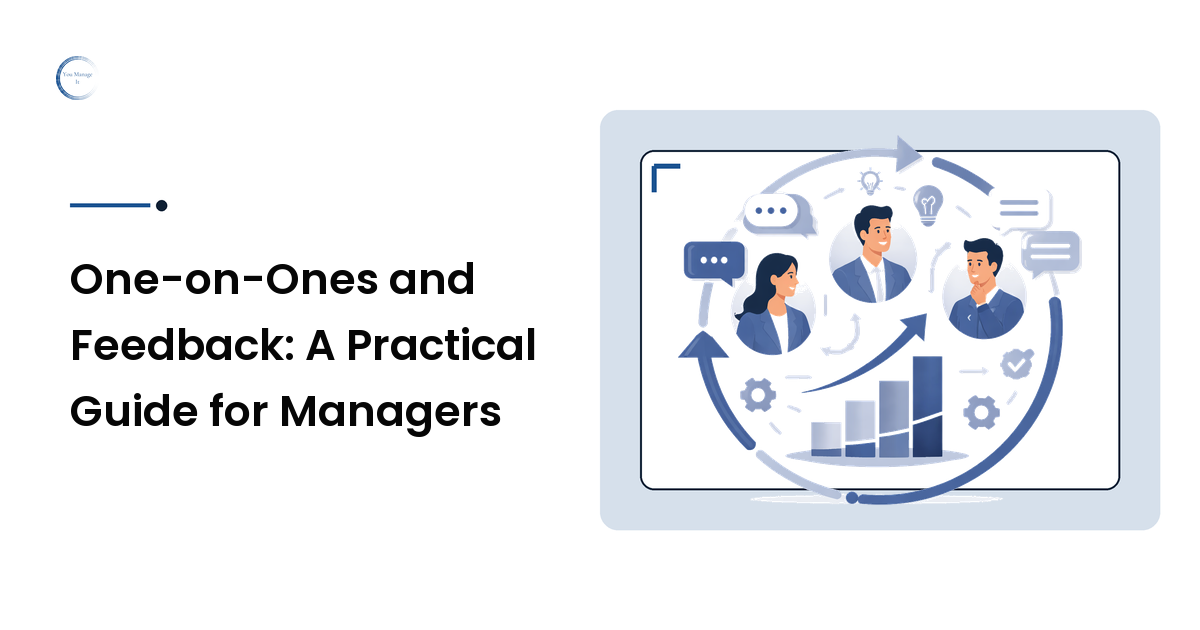
The one-on-one is the most useful half hour on a manager's calendar, and the easiest to waste. Done well, it's where trust gets built, small problems get caught before they grow, and your team tells you what you'd never learn in a group meeting. Done badly — skipped when you're busy, hijacked by status updates, or used only to dump tasks — it quietly teaches people that you don't have time for them.
The short version: a good one-on-one is their meeting, not yours. Hold it regularly, protect it fiercely, let the person set most of the agenda, and use it to listen more than you talk. Feedback — both the encouraging kind and the corrective kind — is woven through it, delivered early, specifically, and kindly. This guide gives you the cadence, a simple agenda, and scripts you can use on Monday.
Why the one-on-one matters more than you think
A team meeting is for the team. The one-on-one is the only regular time built for the individual — their work, their obstacles, their growth, and the things they won't say in front of peers. It's where the human side of leading actually happens; if you want the bigger picture of building trust and leading a team, start with leading people for the first time. The one-on-one is where most of that work gets done in practice, one conversation at a time.
It also pays off in fewer surprises. Most blow-ups — a frustrated person about to quit, a project quietly off the rails, a simmering conflict — give off early signals. A standing one-on-one is where those signals surface while they're still small and cheap to fix. The trade-off is real: it's recurring time you have to defend against a busy calendar. But the alternative — finding out about problems once they're emergencies — costs far more.
Get the cadence right
Consistency matters more than length. A reliable 30 minutes every week or two beats a luxurious hour that gets cancelled whenever things get busy. The signal of a kept one-on-one — you matter enough that I protect this time — is half the value.
A few practical defaults:
- Frequency: weekly for newer team members or fast-moving work; biweekly for experienced people in steady roles. When in doubt, start more often and ease off.
- Length: 30 minutes is plenty for most. Block it as recurring so it's the default, not a decision you re-make each week.
- Protect it. Reschedule rather than cancel when something genuinely collides. Cancelling repeatedly sends the opposite message of the one you want.
A simple agenda that works
A one-on-one without any shape drifts into a status update — the least valuable thing it can be, because you can get status from a tool. Give it a light structure and hand most of it to them. Share these three prompts in advance so they can come prepared:
- How are you doing, and how's the work going? Start human. This is where you hear about workload, energy, and friction before it becomes a problem.
- What's in your way? The single most useful question a manager can ask. Your job is often just to remove the obstacle — the unclear priority, the missing access, the decision they're stuck waiting on.
- What do you want to talk about? Let them drive. Their topics matter more than yours, because the things they raise are the things you'd otherwise miss.
Keep your own items — updates, a piece of feedback, a priority to align on — for the back half, after you've listened. And take a few notes, especially on what you committed to. Following through on what surfaced is what turns the meeting from a chat into trust.
Make it their meeting, not your status check
The most common one-on-one mistake is the manager talking for 25 of the 30 minutes. If you're doing most of the talking, it's your meeting, and the person learns to show up passive. Flip it: ask, then be quiet long enough for a real answer. Silence feels awkward to you and gives them room to say the thing they were deciding whether to mention.
This is also why status belongs elsewhere when possible. Spend the precious face time on what a dashboard can't tell you — how they're really doing, what's frustrating them, where they want to grow.
Give feedback that actually lands
Feedback is the other half of this guide, and most managers either avoid it or save it for a once-a-year review where it's useless. The fix is to make it small, frequent, and specific — woven into your one-on-ones and the days between them, not stockpiled.
Make praise specific
"Great job" is forgettable. Specific recognition teaches people exactly what to repeat: "The way you restructured that report made the numbers obvious to the client — that's why the call went so well." Praise is the cheapest, most underused tool you have, and specific praise is what makes it land.
Course-correct early, privately, and kindly
When something's off, address it early — while it's small — in private, and focused on the behavior and its impact rather than the person. A simple, reusable structure:
"I noticed [specific behavior]. The impact was [specific effect]. Going forward, I need [specific change]. What's getting in the way?"
For example: "I noticed the last two reports came in a day late. The impact is the client gets them with no time to review before our call. Going forward I need them by Wednesday end of day. What's making the timing hard?" It names the issue without attacking the person, and the closing question opens the door to the real cause — which is often something you can fix.
Ask for feedback too
A one-on-one runs both ways. Asking "What could I do differently to make your job easier?" does two things: it surfaces problems you can't see, and it models that feedback is normal and safe. Expect silence the first few times — trust that you'll actually act on it has to be earned before people speak freely.
Handling the hard conversations
Some one-on-ones are genuinely difficult — a serious performance problem, a complaint, disappointing news. A few principles keep them from going sideways:
- Don't ambush. If the topic is heavy, signal it: "I'd like to talk through the project timeline today." People shut down when blindsided.
- Be direct and kind at once. Softening a message until it disappears is unkind — the person leaves not knowing there's a problem. Say the real thing, plainly, and with respect.
- Listen for context before concluding. You may be missing something. State what you observed, then genuinely hear their side before deciding what happens next.
- End with a clear next step. Both of you should leave knowing what changes and by when. Vague hard conversations just have to be repeated.
A starter routine
If you're setting this up from scratch, start here:
- Schedule a recurring 30-minute one-on-one with each direct report this week.
- Send the three-question agenda in advance so they come prepared.
- Let them talk first, and ask "what's in your way?" every time.
- Give one piece of specific feedback per session — usually praise; correction when needed, early.
- Note what you committed to, and follow through before the next one.
FAQ
How often should I hold one-on-ones?
Weekly for newer team members or fast-changing work, biweekly for experienced people in steady roles. Consistency matters more than frequency — a reliable, protected 30 minutes beats a long meeting that keeps getting cancelled.
What should a one-on-one agenda include?
Keep it light and theirs: how they're doing and how the work is going, what's getting in their way, and whatever they want to raise. Save your own updates and feedback for the back half, after you've listened. Share the prompts ahead of time so they arrive prepared.
How do I give negative feedback without damaging the relationship?
Deliver it early, in private, and focused on the behavior and its impact, not the person. Use a simple structure — what you noticed, the effect, what you need going forward, then ask what's getting in the way. Handled that way, honest feedback usually strengthens a relationship because it signals you take the person seriously.
What if my one-on-ones keep turning into status updates?
That usually means the manager is driving. Push status to a tool or a group check-in, and use the one-on-one for what a dashboard can't show — how the person is really doing and what they need. Ask more, talk less, and hand them the agenda.
Should I cancel a one-on-one when I'm slammed?
Reschedule rather than cancel. Skipping it sends the message that the person is low priority, which is the opposite of the point. The reliability of the meeting is a large part of its value.
Next step
You don't need a perfect system to start. This week, book a recurring 30-minute one-on-one with each person on your team, send them the three-question agenda in advance, and let them talk first. Listen, note what you promised, and follow through. That single habit does more for trust and performance than almost anything else on your calendar. For more on the wider craft of leading a team, explore YouManageIt.