Search for the best one-on-ones and you'll find a hundred agenda templates, each promising to be the one. But the best one-on-ones aren't about finding a magic template — they share a handful of traits that hold true whether you meet weekly or biweekly, in person or over video. Get those traits right and almost any agenda works. Get them wrong and the fanciest template still drifts into a status update. This guide covers what the best one-on-ones have in common, the questions and cadence great managers use, and the tools and books actually worth your time.
The short version: the best one-on-one is their meeting, held reliably, where the person talks more than you do and leaves with at least one obstacle removed. Everything below is in service of that.
What makes the best one-on-ones? Five traits to look for
Instead of grading meetings by their template, grade them by these criteria. The best one-on-ones score high on all five:
- It's consistent. A kept 30 minutes every week or two beats a luxurious hour that gets cancelled the moment things get busy. Consistency is itself the message: you matter enough that I protect this time.
- It's theirs, not yours. If you're talking for 25 of the 30 minutes, it's your meeting, and the person learns to show up passive. The best ones hand most of the airtime to the report.
- It surfaces obstacles. The single most useful question a manager can ask is "What's in your way?" A one-on-one that regularly removes a blocker earns its place on the calendar.
- It builds trust over time. Value compounds. The tenth conversation goes deeper than the first because the person has learned it's safe to be honest.
- It ends in follow-through. Notes taken, commitments kept. The difference between a pleasant chat and a trusted one-on-one is whether what surfaced actually gets acted on.
Use these as your selection criteria. When a meeting feels flat, one of the five is usually missing — and naming which one tells you what to fix.
Why one-on-ones are important
A team meeting is for the team. The one-on-one is the only regular time built for the individual — their work, their obstacles, their growth, and the things they'll never say in front of peers. It's where the human side of leading actually happens, one conversation at a time.
It also pays off in fewer surprises. Most blow-ups — a frustrated person about to quit, a project quietly off the rails, a simmering conflict — give off early signals. A standing one-on-one is where those signals surface while they're still small and cheap to fix. The trade-off is honest: it's recurring time you have to defend against a packed calendar. But finding out about problems once they've become emergencies costs far more than the half hour you protected.
The questions behind the best one-on-ones
The best one-on-ones run on a few good prompts, shared in advance so the person can come prepared. Keep it light and hand most of it to them:
- How are you doing, and how's the work going? Start human. This is where you hear about workload, energy, and friction before it becomes a problem.
- What's in your way? Often your job is simply to remove the obstacle — the unclear priority, the missing access, the decision they're stuck waiting on.
- What do you want to talk about? Let them drive. The topics they raise are exactly the ones you'd otherwise miss.
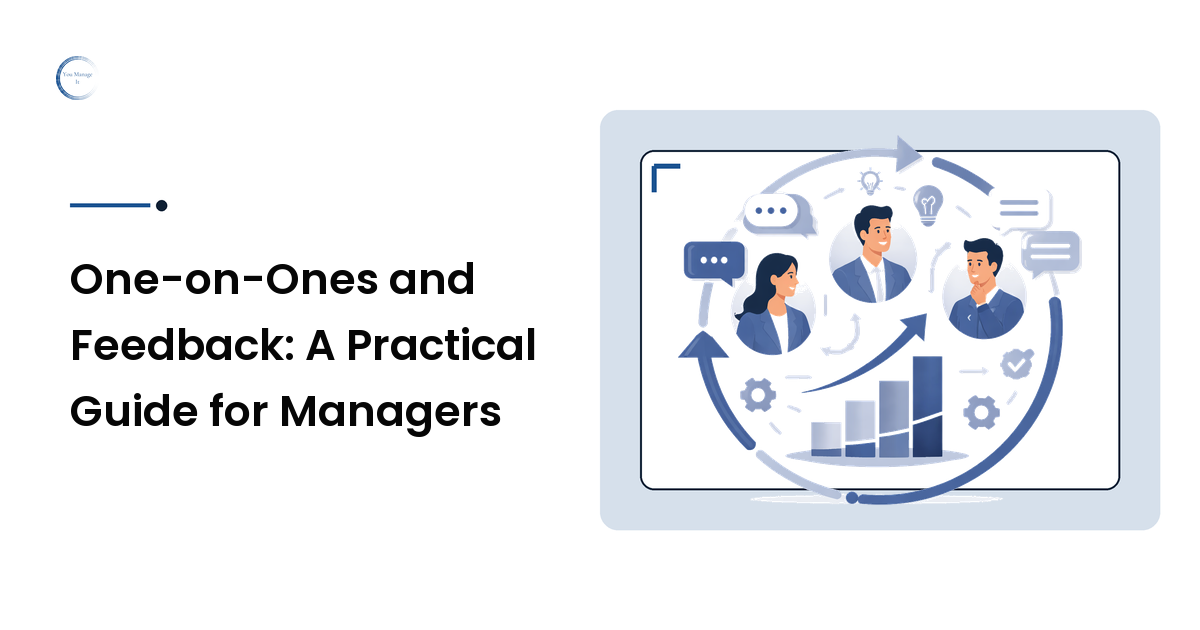
Keep your own items — an update, a piece of feedback, a priority to align on — for the back half, after you've listened. Then ask, and stay quiet long enough for a real answer; the silence that feels awkward to you is the room the other person needs to say the thing they were deciding whether to mention. For the full cadence, agenda, and word-for-word feedback scripts, see our practical guide to one-on-ones and feedback.
One on ones manager tools: what actually helps
Tools don't create good one-on-ones — the five traits above do — but the right one removes friction so you're not rebuilding the meeting from scratch each week. Compare them by fit, not feature count:
- A shared doc or note. The humble default: a running document per person, newest notes on top, both of you editing. Free, flexible, and enough for most managers. The trade-off is that nothing nudges you — consistency lives entirely on your discipline and calendar.
- A calendar recurring event plus a template. Pair a standing invite with a pinned agenda. Low effort, hard to skip, and it keeps the meeting from silently disappearing. Best for managers with a handful of reports.
- Dedicated one-on-one apps (the category that includes tools like Fellow, Lattice, and 15Five). These add shared agendas, talking-point queues, action-item tracking, and reminders. Worth it if you manage many people or want feedback and goals living alongside your notes — but they're overkill for a small team, and a paid app won't fix a meeting you keep cancelling.
The honest rule: start with a shared doc and a recurring invite. Only reach for a dedicated tool when you feel a specific pain — dropped action items, too many people to track — that the simple setup can't solve.
Leadership and management: where one-on-ones fit
It helps to separate the two words people use interchangeably. Management is the system work — priorities, resourcing, making sure the right things get done. Leadership is the human work — direction, trust, helping people grow. The one-on-one is where those two meet on your calendar: you align on the work (management) and invest in the person (leadership) in the same half hour.
That's why the best one-on-ones are such high-leverage time for a new manager. You don't have to choose between driving results and developing people — done well, the one-on-one is the recurring place you do both at once.
Best leadership books for new leaders
No article replaces a good book, and the best leadership books for new managers are the practical ones grounded in the actual job — not the airport bestsellers promising to unlock your potential. A few widely respected, genuinely useful titles:
- The Making of a Manager by Julie Zhuo — an honest field guide to the first year of managing, including running one-on-ones.
- Radical Candor by Kim Scott — on caring personally while challenging directly, the backbone of feedback in your one-on-ones.
- The Manager's Path by Camille Fournier — especially strong for managers in tech and anyone growing from lead to leader.
- High Output Management by Andy Grove — a classic on management as a system, and where meetings like the one-on-one create leverage.
- Multipliers by Liz Wiseman — on leading in a way that makes the people around you smarter and more capable.
If you only pick one to start, choose the book closest to your current problem: Zhuo if you're brand new, Scott if feedback is your sticking point, Fournier if you're finding your footing on a technical team. The best leadership book is the one you'll actually finish and apply this month — read it slowly, try one idea in your next one-on-one, and let the rest wait.
Bringing it together
The best one-on-ones aren't a template you download; they're a habit you protect. Hold the meeting reliably, make it theirs, chase down the obstacles, keep your promises, and let trust compound. Add a simple tool when — and only when — you feel a real pain, and let a good book sharpen one skill at a time. Do that, and the most useful half hour on your calendar starts earning its place every single week.